KPV
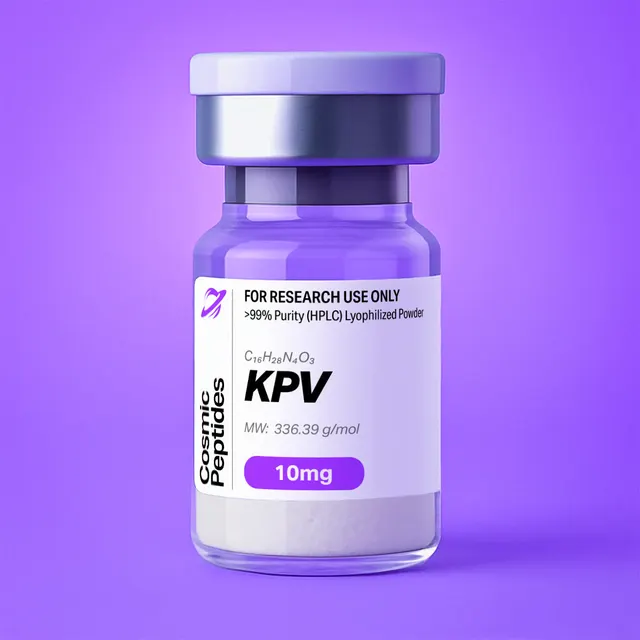
KPV
Commonly researched with these items
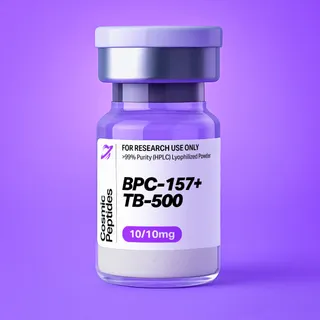
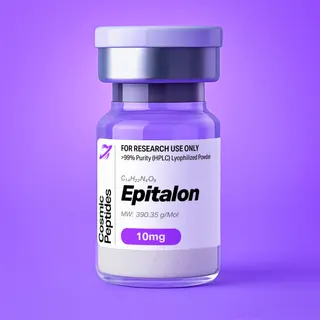
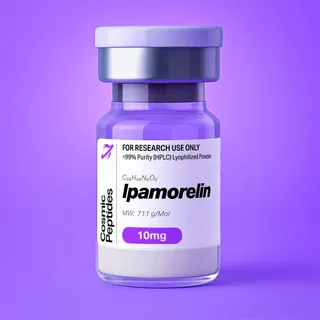
Patent-pending lot tracking: Complete transparency from production to vial.
KPV (Lys-Pro-Val): The C-Terminal Tripeptide of α-Melanocyte-Stimulating Hormone
Disclaimer
Products described here are supplied for research use only and are not intended for diagnostic, therapeutic, or clinical application. All statements regarding biological activity reflect preclinical and in vitro findings exclusively and have not been evaluated by the U.S. Food and Drug Administration. These materials and related content are provided for educational and investigational purposes only and are intended solely for qualified researchers in laboratory and academic settings.
Key Facts
- Compound class
- Linear tripeptide; C-terminal fragment (residues 11–13) of α-melanocyte-stimulating hormone (α-MSH)
- Sequence
H-Lys-Pro-Val-OH(one-letter code: KPV), all residues in the L-configuration- Molecular formula
- C16H30N4O4
- Molecular weight
- 342.43 g/mol (average); monoisotopic mass 342.2267 Da
- CAS number
- 67727-97-3
- PubChem CID
- 125672
- Physical form as supplied
- Lyophilized powder
- Lot traceability
- Every unit is tied to a tracked lot; the lot number, recorded purity and verified quantity of the lot on sale are shown live on this page, with its certificate of analysis.
Molecular Identity and Classification
KPV is the tripeptide lysyl-prolyl-valine, written H-Lys-Pro-Val-OH. It corresponds to residues 11, 12 and 13 of α-melanocyte-stimulating hormone (α-MSH), the thirteen-residue product of pro-opiomelanocortin (POMC) processing whose full sequence is Ac-Ser-Tyr-Ser-Met-Glu-His-Phe-Arg-Trp-Gly-Lys-Pro-Val-NH2. In the parent hormone the C-terminal valine is amidated; the research compound supplied as KPV carries a free C-terminal carboxylic acid, a distinction that matters when comparing literature reports, because amidated and free-acid tripeptides differ in net charge, retention behaviour and recognition by peptide transporters.
The IUPAC name, (2S)-2-[[(2S)-1-[(2S)-2,6-diaminohexanoyl]pyrrolidine-2-carbonyl]amino]-3-methylbutanoic acid, encodes the three stereocentres, all of the S (L) configuration. The molecular formula is C16H30N4O4, the average molecular weight 342.43 g/mol, and the monoisotopic mass 342.2267 Da. KPV is registered under CAS number 67727-97-3 and as PubChem compound 125672.
Chemically, KPV belongs to the class of short linear oligopeptides. It is small enough to behave in many respects like a polar small molecule (it is freely water-soluble and carries no secondary structure of its own), yet it retains the defining features of a peptide: two amide bonds, a free N-terminal amine, a free C-terminal acid and side chains that dictate its charge and hydrophobicity. That combination makes KPV a convenient model compound for studying how a minimal fragment of a larger signalling peptide behaves in isolation.
The interest in KPV traces back to structure–activity work on α-MSH in the late 1980s, when researchers dissected the hormone into fragments to find out which portion carried which activity. The C-terminal tripeptide, residues 11–13, emerged as a fragment that retained measurable activity in inflammatory signalling assays despite lacking the His-Phe-Arg-Trp core (residues 6–9) that is essential for high-affinity binding to melanocortin receptors. That observation, first reported by Hiltz and Lipton in 1989, made KPV a recurring subject of mechanistic research on how a peptide fragment can act without the canonical receptor pharmacophore.
Structure and Chemical Features
Each of KPV's three residues contributes a distinct chemical character. The N-terminal lysine provides two primary amines: the α-amine at the N-terminus and the ε-amine at the end of its four-carbon side chain. The ε-amine has a pKa near 10.5, so at physiological and most laboratory pH values the lysine side chain is protonated and positively charged. The central proline is the only proteinogenic amino acid whose side chain loops back onto its own backbone nitrogen, forming a five-membered pyrrolidine ring. The C-terminal valine carries a branched isopropyl side chain that is the most hydrophobic element of the molecule.
The proline residue has three structural consequences. First, the Lys–Pro peptide bond is a tertiary amide: the proline nitrogen carries no hydrogen, so it cannot act as a hydrogen-bond donor. Second, the energy difference between the trans and cis forms of an X–Pro bond is small compared with ordinary peptide bonds, so a measurable fraction of the Lys–Pro bond exists in the cis conformation in solution, and the two isomers interconvert slowly on the NMR timescale. In 1H and 13C NMR spectra of KPV this appears as doubled resonances for nuclei near the proline. Third, the ring constrains the backbone dihedral angle φ of proline to about −65°, which limits the conformations the tripeptide can adopt and gives it a degree of local rigidity unusual for so short a chain.
At neutral pH KPV is a zwitterion with two positive charges (the N-terminal α-amine and the lysine ε-amine) and one negative charge (the C-terminal carboxylate), for a net charge of approximately +1. Its calculated isoelectric point lies in the basic range, around 9.7 to 10, because two amines outnumber the single carboxylic acid. The molecule has 4 hydrogen-bond donors, 6 hydrogen-bond acceptors and 9 rotatable bonds, with a topological polar surface area of about 139 Å2 and a calculated XLogP of −3.5. These descriptors describe a highly polar, water-loving molecule.
Relationship to the Parent Hormone
In α-MSH the Lys-Pro-Val segment sits at the C-terminus, after the Gly10 residue that follows the receptor-binding core. Structural studies of the parent hormone show that this tail is flexible rather than part of a defined fold, which is consistent with the tripeptide being able to act independently once cleaved from the hormone. Researchers comparing KPV with the parent hormone, with the amidated tripeptide (KPV-NH2) and with the D-valine stereoisomer use these closely related structures to separate effects that depend on melanocortin receptor binding from effects that do not.
Synthesis and Manufacturing Chemistry
KPV is produced by solid-phase peptide synthesis (SPPS), the method introduced by Merrifield in 1963 in which a peptide chain is assembled one residue at a time on an insoluble resin. For a C-terminal free acid, synthesis typically begins with valine attached to an acid-labile resin such as 2-chlorotrityl chloride or Wang resin. The chain is then extended from the C-terminus towards the N-terminus: proline is coupled to valine, and lysine is coupled to proline.
Modern KPV synthesis uses Fmoc chemistry, based on the 9-fluorenylmethoxycarbonyl protecting group described by Carpino and Han in 1972. Each incoming amino acid carries an Fmoc group on its α-amine, which is removed with a mild base (commonly 20% piperidine in dimethylformamide) before the next coupling. Reactive side chains are protected with acid-labile groups; for KPV only the lysine ε-amine needs protection, usually as the tert-butyloxycarbonyl (Boc) derivative, Fmoc-Lys(Boc)-OH. Couplings are driven by carbodiimide or uronium/phosphonium activators such as DIC/Oxyma, HBTU or HATU.
Two chemical points are specific to this sequence. Coupling an amino acid onto the secondary amine of proline is slower than coupling onto a primary amine, so the Lys-onto-Pro step benefits from a stronger activator or a double coupling. And dipeptides with proline in the second position are prone to cyclising into a diketopiperazine when the N-terminal Fmoc group is removed at the dipeptide stage, which cleaves the chain from the resin; the choice of a sterically hindered resin such as 2-chlorotrityl and prompt coupling of the third residue keep this side reaction in check.
After assembly, a single cleavage step with trifluoroacetic acid (TFA), together with scavengers such as water and triisopropylsilane, releases the peptide from the resin and removes the Boc group at the same time. The crude peptide is precipitated in cold ether, purified by preparative reversed-phase HPLC, and lyophilized. Because TFA is used throughout purification, the product is commonly obtained as a trifluoroacetate salt unless it is exchanged into another counterion such as acetate or chloride; the certificate of analysis for each lot states the analytical results that apply to that material.
Analytical Characterization
Identity and purity of a short peptide such as KPV are established by a small set of complementary techniques. Reversed-phase HPLC with UV detection at 210–220 nm (where the amide bonds absorb) separates the target peptide from synthesis by-products and reports purity as the percentage of total peak area. Because KPV contains no aromatic residue, it has negligible absorbance at 280 nm, so detection relies on the peptide-bond region. Its high polarity means it elutes early on C18 columns; analysts typically use a shallow gradient starting at low organic content (for example 0–20% acetonitrile in water with 0.1% TFA) or a polar-embedded column to obtain adequate retention.
Mass spectrometry confirms identity. In positive electrospray ionization KPV gives a protonated molecular ion [M+H]+ at m/z 343.234 and, because it carries two basic amines, a doubly charged ion [M+2H]2+ at m/z 172.121. Tandem MS fragments the two amide bonds: cleavage C-terminal to proline is disfavoured relative to cleavage N-terminal to proline (the "proline effect"), so the y2 ion corresponding to Pro-Val (m/z 215.139) is characteristically prominent. These values let a laboratory verify identity independently of the supplier's documentation.
A distinction that matters for quantitative work is the difference between purity and peptide content. HPLC purity describes what fraction of the UV-absorbing material is the target peptide. Peptide content describes what fraction of the weighed powder is peptide at all, as opposed to counterions (such as trifluoroacetate), bound water and residual salts. A lyophilized peptide with 99% HPLC purity can have a peptide content well below 100% by weight. For a tripeptide with two basic groups, the mass of associated counterions is proportionally large: two trifluoroacetate ions (114.02 g/mol each) add roughly 228 g/mol to a 342 g/mol peptide. Amino-acid analysis or quantitative NMR determines peptide content when exact molar concentrations are needed.
Complementary techniques include amino-acid analysis after acid hydrolysis (expected molar ratio Lys:Pro:Val of 1:1:1), chiral analysis to confirm that no D-isomers were formed during synthesis, ion chromatography to quantify the counterion, and Karl Fischer titration for water content.
Physicochemical Properties
| Property | Value | Notes |
|---|---|---|
| Molecular formula | C16H30N4O4 | Free base, without counterions |
| Average molecular weight | 342.43 g/mol | PubChem CID 125672 |
| Monoisotopic mass | 342.2267 Da | Used for high-resolution MS |
| [M+H]+ / [M+2H]2+ | m/z 343.234 / 172.121 | Positive-mode ESI |
| Net charge at pH 7 | approximately +1 | Two amines, one carboxylate |
| Isoelectric point | about 9.7–10 (calculated) | Basic, owing to lysine |
| XLogP3 | −3.5 | Highly hydrophilic |
| Topological polar surface area | 139 Å2 | Computed |
| Hydrogen-bond donors / acceptors | 4 / 6 | Computed |
| Rotatable bonds | 9 | Computed |
| UV absorbance | Peptide bond only (about 214 nm) | No aromatic residues; no 280 nm signal |
| Solubility | Freely soluble in water and aqueous buffers | Typical for a short, charged peptide |
The physicochemical profile of KPV follows directly from its composition. With two protonatable amines and only one hydrophobic side chain, it dissolves readily in water and in common aqueous buffers and shows little tendency to aggregate. Its strongly negative partition coefficient means that it does not cross lipid membranes by passive diffusion to any meaningful extent; movement across cell membranes depends on carrier proteins, a point that has shaped how researchers study it in cell systems.
In the solid state, lyophilized KPV is hygroscopic: it takes up atmospheric moisture, which affects weighing accuracy and can accelerate slow degradation. In solution, the main chemical liabilities of a sequence like KPV are hydrolysis of the peptide bonds at extreme pH and, over long periods, intramolecular reactions involving the N-terminal amine. KPV contains no methionine, cysteine or tryptophan, so it is not susceptible to the oxidation reactions that limit the stability of many larger peptides.
Research Context
Research on KPV centres on a question with broad relevance to peptide science: how can a fragment that lacks a hormone's receptor-binding core still produce measurable effects in cell-based assays? Brzoska and colleagues reviewed this literature in 2008, describing α-MSH and its C-terminal tripeptides as a family of molecules that modulate inflammatory signalling in vitro through mechanisms that are only partly explained by melanocortin receptor binding.
Transport Into Cells
Because KPV is too polar to cross membranes by diffusion, the route by which it enters cells is central to interpreting in vitro experiments. A key study by Dalmasso and colleagues (2008) identified the proton-coupled oligopeptide transporter PepT1 (gene SLC15A1) as a carrier for KPV in intestinal epithelial cell lines. PepT1 belongs to the SLC15 family, which moves di- and tripeptides across membranes coupled to an inward proton gradient. Its substrate range is remarkably broad: it accepts most of the 400 possible dipeptides and 8,000 possible tripeptides built from the proteinogenic amino acids. Using epithelial cell lines grown as polarized monolayers, the authors showed uptake of KPV that depended on PepT1 expression and that competing PepT1 substrates reduced it.
Intracellular Signalling
In the same cell systems, KPV at nanomolar concentrations reduced the activation of the transcription factor NF-κB and of mitogen-activated protein kinase (MAPK) pathways that follow stimulation with inflammatory cytokines, and it lowered the secretion of the chemokine interleukin-8. These are standard read-outs in epithelial cell biology: researchers measure NF-κB activity with reporter-gene assays or by tracking the nuclear translocation of its p65 subunit, follow MAPK activation by immunoblotting for phosphorylated ERK, p38 and JNK, and quantify secreted cytokines by ELISA. KPV is therefore used as a tool compound in studies that investigate how peptide transport and intracellular peptide pools relate to signalling in epithelial cells.
The melanocortin receptors MC1R to MC5R are G protein-coupled receptors that signal mainly through cyclic AMP. Because KPV lacks the His-Phe-Arg-Trp core, its affinity for these receptors is low, and experiments that compare it with α-MSH and with receptor-selective agonists or antagonists help distinguish receptor-dependent effects from effects that follow transporter-mediated uptake. Comparisons between the L-valine form and the D-valine stereoisomer, and between the free acid and the amide, are a further tool, since the transporter and the receptors differ in their stereochemical and terminal-group preferences.
Typical in vitro designs include concentration–response series spanning roughly 1 nM to 10 µM, time-course experiments to separate early signalling events from later changes in gene expression, transporter knock-down or competition experiments, and scrambled-sequence or stereoisomer controls. Because KPV is a small, hydrophilic peptide, it is also used as a model substrate in studies of peptide transporter kinetics and of peptide stability in cell culture media.
Related Compounds
KPV sits within a family of research peptides derived from or related to the melanocortin system. α-MSH itself, its amidated and acetylated forms, and the stabilized analogues developed from it all share the C-terminal Lys-Pro-Val sequence or a close variant. Comparing KPV with these molecules is a common way to locate an observed effect within the hormone's structure.
Researchers interested in short regulatory peptides also study other compact sequences with well-defined chemistry, for example the copper-binding tripeptide GHK-Cu, the tetrapeptide Epitalon and the tripeptide Pinealon. Like KPV, these are small enough for complete characterization by HPLC, mass spectrometry and NMR, which makes them useful reference points for analytical method development.
Laboratory Handling and Storage
Storage of the solid. Lyophilized KPV is best kept tightly closed at −20 °C, protected from light and moisture. Because the powder is hygroscopic, a vial taken from the freezer should be allowed to reach room temperature in a desiccator before it is opened; otherwise moisture condenses on the cold powder and adds to the weighed mass.
Preparing solutions. KPV dissolves readily in high-purity water and in aqueous buffers such as phosphate-buffered saline. For accurate molar concentrations, correct the weighed mass for peptide content (see Analytical Characterization) rather than assuming the powder is 100% peptide. Stock solutions are usually prepared at 1–10 mM, filtered through a 0.22 µm membrane when they are destined for cell culture, divided into single-use aliquots, and frozen at −20 °C or −80 °C. Repeated freeze–thaw cycles should be avoided.
Working with small amounts. At low concentrations, short peptides can adsorb to the surfaces of plastic tubes and pipette tips. Low-binding polypropylene ware, and the inclusion of a carrier protein in assay buffers where the experimental design allows, reduce these losses. For cell-based work, a vehicle control matched for counterion content (for example, an equivalent concentration of trifluoroacetate) helps rule out effects of the counterion itself, a point made by Cornish and colleagues, who showed that trifluoroacetate alone can influence cell proliferation in culture.
Verification. A quick LC-MS check of a stock solution, looking for the [M+H]+ ion at m/z 343.23, confirms identity and integrity after long storage. Each lot's certificate of analysis, linked on this page, records the analytical results for that lot.
Frequently Asked Research Questions
- What is KPV?
- KPV is the tripeptide lysyl-prolyl-valine (H-Lys-Pro-Val-OH), the C-terminal fragment, residues 11–13, of α-melanocyte-stimulating hormone. It has the molecular formula C16H30N4O4 and a molecular weight of 342.43 g/mol.
- What is the CAS number of KPV?
- KPV is registered under CAS number 67727-97-3 and appears in PubChem as compound 125672.
- How does KPV differ from α-MSH?
- α-MSH has thirteen residues, an acetylated N-terminus and an amidated C-terminus, and contains the His-Phe-Arg-Trp core needed for high-affinity melanocortin receptor binding. KPV is only the last three residues, with a free acid C-terminus, and binds melanocortin receptors weakly.
- What mass should I see for KPV by mass spectrometry?
- In positive electrospray ionization, the protonated ion [M+H]+ appears at m/z 343.234 and the doubly protonated ion [M+2H]2+ at m/z 172.121. The monoisotopic mass of the neutral peptide is 342.2267 Da.
- Why does KPV show little absorbance at 280 nm?
- KPV contains no tryptophan, tyrosine or phenylalanine, the residues responsible for absorbance near 280 nm. HPLC detection relies on the peptide bonds, which absorb at about 210–220 nm.
- Is KPV soluble in water?
- Yes. KPV is a small, charged and highly polar peptide (calculated XLogP −3.5) that dissolves readily in water and in common aqueous buffers.
- What is the difference between purity and peptide content?
- HPLC purity is the fraction of UV-absorbing material that is KPV. Peptide content is the fraction of the weighed powder that is peptide, as opposed to counterions such as trifluoroacetate, water and salts. Accurate molar concentrations require correcting for peptide content.
- How does KPV enter cells in culture?
- KPV is too polar to diffuse across membranes. In intestinal epithelial cell lines it is carried by the proton-coupled peptide transporter PepT1 (SLC15A1), as shown by Dalmasso and colleagues in 2008.
- Which signalling read-outs are used in KPV research?
- In vitro studies follow NF-κB activation (reporter assays or p65 nuclear translocation), MAPK phosphorylation (ERK, p38, JNK) and secreted chemokines such as interleukin-8, typically after cytokine stimulation of epithelial cell lines.
- Why does the proline in KPV matter analytically?
- The Lys–Pro bond exists as interconverting cis and trans isomers, which can double some NMR signals, and proline directs fragmentation in tandem mass spectrometry, making the Pro-Val y2 ion prominent.
- How should lyophilized KPV be stored?
- Tightly closed at −20 °C, protected from light and moisture, and warmed to room temperature in a desiccator before opening, because the powder is hygroscopic.
- Where can I see the purity of the KPV I am buying?
- This page shows the lot number, recorded purity and verified quantity of the lot currently on sale, taken live from the shop's lot-tracking database, together with that lot's certificate of analysis.
Sources & Further Reading
- National Center for Biotechnology Information. PubChem Compound Summary for CID 125672, Lys-Pro-Val. PubChem CID 125672.
- Hiltz ME, Lipton JM. Antiinflammatory activity of a COOH-terminal fragment of the neuropeptide α-MSH. The FASEB Journal 1989;3(11):2282–2284. doi:10.1096/fasebj.3.11.2550304
- Brzoska T, Luger TA, Maaser C, Abels C, Böhm M. α-Melanocyte-stimulating hormone and related tripeptides: biochemistry, antiinflammatory and protective effects in vitro and in vivo, and future perspectives. Endocrine Reviews 2008;29(5):581–602. doi:10.1210/er.2007-0027
- Dalmasso G, Charrier-Hisamuddin L, Nguyen HTT, Yan Y, Sitaraman S, Merlin D. PepT1-mediated tripeptide KPV uptake reduces intestinal inflammation. Gastroenterology 2008;134(1):166–178. doi:10.1053/j.gastro.2007.10.026
- Smith DE, Clémençon B, Hediger MA. Proton-coupled oligopeptide transporter family SLC15: physiological, pharmacological and pathological implications. Molecular Aspects of Medicine 2013;34(2–3):323–336. doi:10.1016/j.mam.2012.11.003
- Merrifield RB. Solid phase peptide synthesis. I. The synthesis of a tetrapeptide. Journal of the American Chemical Society 1963;85(14):2149–2154. doi:10.1021/ja00897a025
- Carpino LA, Han GY. 9-Fluorenylmethoxycarbonyl amino-protecting group. The Journal of Organic Chemistry 1972;37(22):3404–3409. doi:10.1021/jo00795a005
- Wedemeyer WJ, Welker E, Scheraga HA. Proline cis–trans isomerization and protein folding. Biochemistry 2002;41(50):14637–14644. doi:10.1021/bi020574b
- Mant CT, Chen Y, Yan Z, et al. HPLC analysis and purification of peptides. Methods in Molecular Biology 2007;386:3–55. doi:10.1007/978-1-59745-430-8_1
- Cornish J, Callon KE, Lin CQ, et al. Trifluoroacetate, a contaminant in purified proteins, inhibits proliferation of osteoblasts and chondrocytes. American Journal of Physiology-Endocrinology and Metabolism 1999;277(5):E779–E783. doi:10.1152/ajpendo.1999.277.5.E779
Last reviewed:

| CAS Number | 67727-97-3 |
|---|---|
| Molecular Formula | C16H30N4O4 |
| Molecular Weight | 342.43 g/Mol |
| Purity | 99.8% |
| Lot Number | 26121 |
| Quantity | 10.24mg |
| Sequence | H-Lys-Pro-Val-OH |
Cosmic Peptides Certificate of Analysis
Unable to load certificate. Download COA