BPC-157/TB-500
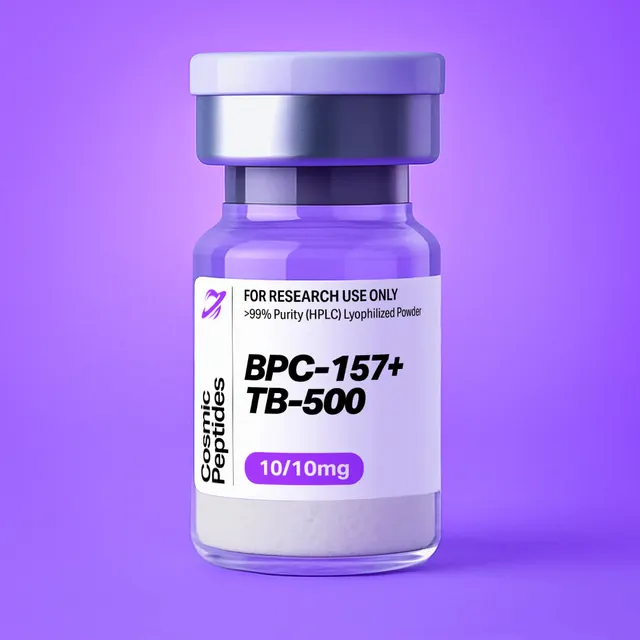
BPC-157/TB-500
Commonly researched with these items
Patent-pending lot tracking: Complete transparency from production to vial.
| Molecular Formula | BLEND |
|---|---|
| Purity | 99.8% |
| Lot Number | 26110 |
| Quantity | 5.13/5.24mg |
BPC-157/TB-500: A Two-Component Blend of the Pentadecapeptide BPC-157 and the Thymosin β4 (17–23) Actin-Binding Fragment
Disclaimer
Products described here are supplied for research use only and are not intended for diagnostic, therapeutic, or clinical application. All statements regarding biological activity reflect preclinical and in vitro findings exclusively and have not been evaluated by the U.S. Food and Drug Administration. These materials and related content are provided for educational and investigational purposes only and are intended solely for qualified researchers in laboratory and academic settings.
Key Facts
- Compound class
- Two-component peptide blend: a linear, proline-rich pentadecapeptide (BPC-157) and an N-acetylated linear heptapeptide corresponding to residues 17–23 of thymosin β4 (TB-500)
- Sequence / structure
- BPC-157:
H-Gly-Glu-Pro-Pro-Pro-Gly-Lys-Pro-Ala-Asp-Asp-Ala-Gly-Leu-Val-OH(GEPPPGKPADDAGLV); TB-500:Ac-Leu-Lys-Lys-Thr-Glu-Thr-Gln-OH(Ac-LKKTETQ) - Molecular formula
- BPC-157: C62H98N16O22; TB-500: C38H68N10O14 (a blend has no single formula)
- Molecular weight
- BPC-157: 1419.54 g/mol (monoisotopic 1418.7042 Da); TB-500: 889.01 g/mol (monoisotopic 888.4916 Da)
- CAS number
- BPC-157: 137525-51-0; TB-500: 885340-08-9 (no CAS number exists for the blend itself)
- PubChem CID
- BPC-157: 9941957; TB-500: 62707662
- Composition
- Equal nominal masses of the two peptides co-packaged as one lyophilized solid; an equal-mass blend contains about 1.60 mol of TB-500 per mol of BPC-157
- Physical form as supplied
- Lyophilized powder
- Lot traceability
- Every unit is tied to a tracked lot; the lot number, recorded purity and verified quantity of the lot on sale are shown live on this page, with its certificate of analysis.
Molecular Identity and Classification
BPC-157/TB-500 is not a single compound but a defined mixture of two unrelated synthetic peptides, supplied together as one lyophilized solid. Each component keeps its own CAS number and analytical signature, so this page describes the two side by side; the table below gives the identity data for each, with intact thymosin β4 as a reference point for the TB-500 fragment.
BPC-157 is the pentadecapeptide H-Gly-Glu-Pro-Pro-Pro-Gly-Lys-Pro-Ala-Asp-Asp-Ala-Gly-Leu-Val-OH. The letters BPC stand for "body protection compound", the name Sikirić and colleagues at the University of Zagreb gave in 1993 to a protein fraction they isolated from gastric juice; the fifteen-residue sequence was described as a partial sequence of that protein, and 157 is part of the laboratory designation of the synthetic fragment. It is a linear peptide with a free N-terminal amine and a free C-terminal carboxylic acid, all chiral residues in the L-configuration, with the formula C62H98N16O22, an average molecular weight of 1419.54 g/mol and a monoisotopic mass of 1418.7042 Da. It is registered as CAS 137525-51-0 and PubChem CID 9941957.
TB-500, as defined for this blend and for the single-component TB-500 product in this catalog, is the N-acetylated heptapeptide Ac-Leu-Lys-Lys-Thr-Glu-Thr-Gln-OH. Its sequence is residues 17 to 23 of thymosin β4 (Tβ4), the segment that contains the protein's central actin-binding motif. Its formula is C38H68N10O14, its average molecular weight 889.01 g/mol and its monoisotopic mass 888.4916 Da; it is registered as CAS 885340-08-9 and PubChem CID 62707662, whose systematic name, N-acetyl-L-leucyl-L-lysyl-L-lysyl-L-threonyl-L-α-glutamyl-L-threonyl-L-glutamine, spells out the sequence and stereochemistry.
| Property | BPC-157 | TB-500 (Ac-Tβ4 17–23) | Thymosin β4 (reference only) |
|---|---|---|---|
| Sequence | GEPPPGKPADDAGLV | Ac-LKKTETQ | Ac-SDKPDMAEIEKFDKSKLKKTETQEKNPLPSKETIEQEKQAGES |
| Length | 15 residues | 7 residues | 43 residues |
| Termini | Free amine / free acid | N-acetyl / free acid | N-acetyl (Ser1) / free acid |
| Molecular formula | C62H98N16O22 | C38H68N10O14 | C212H350N56O78S |
| Average molecular weight | 1419.54 g/mol | 889.01 g/mol | 4963.44 g/mol |
| Monoisotopic mass | 1418.7042 Da | 888.4916 Da | 4960.4863 Da |
| CAS number | 137525-51-0 | 885340-08-9 | 77591-33-4 |
| PubChem CID | 9941957 | 62707662 | 16132341 |
| Origin of the sequence | Partial sequence of a gastric-juice protein | Central actin-binding segment of Tβ4 | Intracellular G-actin-sequestering protein |
What "TB-500" Denotes
The name TB-500 is used inconsistently. In the research-chemical trade it has been applied both to synthetic full-length thymosin β4 (43 residues, about 4963 g/mol) and to the short acetylated fragment Ac-LKKTETQ (889 g/mol). The two differ more than five-fold in mass; the analytical section below shows how one LC-MS run tells them apart. This catalog uses TB-500 for the heptapeptide, and the verified sequence of the lot on sale is shown in the product information box on this page. Most of the structural literature cited below concerns intact Tβ4 and bears on the fragment only insofar as the fragment reproduces part of the parent.
Structure and Chemical Features
BPC-157: a Proline-Rich, Acidic Pentadecapeptide
Four of BPC-157's fifteen residues are proline, at positions 3, 4, 5 and 8, and three of those form the contiguous triplet Pro-Pro-Pro. Each X–Pro bond is a tertiary amide with no amide hydrogen and can adopt the cis as well as the trans geometry at a much smaller energy cost than an ordinary peptide bond, so with four prolyl bonds BPC-157 exists in solution as an ensemble of slowly interconverting cis/trans isomers, which shows up as multiple sets of resonances in NMR spectra and can broaden chromatographic peaks at low column temperature. A run of consecutive prolines also favours the polyproline II conformation, an extended left-handed helix with about three residues per turn that does not need internal hydrogen bonds; the Pro-Pro-Pro segment is the most conformationally restricted part of an otherwise flexible chain.
Its ionizable groups (N-terminal amine, Lys7, Glu2, Asp10, Asp11 and the C-terminal carboxyl) give at pH 7 two positive and four negative charges, a net charge of about −2, and a calculated isoelectric point near 3.8. BPC-157 is therefore an acidic peptide. It contains no aromatic residue (no Trp, Tyr or Phe), no cysteine and no methionine, so it has no 280 nm chromophore, no disulfide chemistry and no oxidation-prone sulfur. Its liability is the Asp-Asp-Ala segment, where aspartyl residues can cyclize to a succinimide (aspartimide) and reopen as α- or β-linked (iso-aspartyl) peptides.
TB-500: the Actin-Binding Motif of Thymosin β4
Ac-LKKTETQ reproduces residues 17–23 of thymosin β4. In the intact protein this segment sits between an N-terminal helical region and a C-terminal helix, and it carries the motif LKKTET that mutational analysis by Van Troys and colleagues identified as essential for actin binding. The same motif, with variations, recurs in the WASP-homology-2 (WH2) domains of many actin-regulating proteins, which is why the fragment is a useful minimal model of this class of actin-binding sequences.
The N-terminal acetyl group is a deliberate structural choice. In intact Tβ4, Leu17 is joined to Lys16 by a peptide bond and carries no free amine; acetylating the fragment's N-terminus removes a positive charge that the native segment never had and caps the chain with an amide, so the fragment more closely resembles an internal sequence. The C-terminus, by contrast, is a free carboxylic acid where the parent continues through a peptide bond to Glu24, so the fragment carries one negative charge that the native segment does not.
At pH 7 the two lysine ε-amines are protonated and the Glu21 side chain and the C-terminal carboxylate are ionized, so TB-500 is a zwitterion with two positive and two negative charges and a net charge of about zero. Its net charge stays close to zero across a broad plateau, from roughly pH 5 to pH 9, and the calculated isoelectric point near 7.2 is the midpoint of that plateau rather than a sharp crossing. Like BPC-157, TB-500 contains no aromatic residue and no sulfur. Its side-chain amide (Gln23) is the site of slow deamidation, and its two threonines add hydroxyl groups that increase polarity.
Free Tβ4 is largely unstructured and folds only on binding actin (Domanski and colleagues, by NMR), so the isolated fragment is best regarded as intrinsically disordered.
Synthesis and Manufacturing Chemistry
Both components are made by Fmoc-based solid-phase peptide synthesis (SPPS), built on Merrifield's 1963 solid-phase method. Each is synthesized and purified on its own and the two are combined before lyophilization, so the blend is a mixture of two finished peptides, each with its own sequence-related impurities.
BPC-157. Assembly begins from Fmoc-Val on an acid-labile resin (2-chlorotrityl or Wang) and proceeds towards the N-terminal glycine. Side-chain protection is needed for Glu (OtBu), both Asp residues (OtBu) and Lys (Boc). Two steps need attention. Acylating the secondary amine of a proline is slower than acylating a primary amine, and the sequence demands it four times, three of them in succession across the Pro-Pro-Pro block; stronger activators (such as HATU or DIC/Oxyma) and double couplings are routine there, and incomplete coupling shows up as des-Pro deletion peptides (−97.053 Da). The Asp-Asp pair is exposed to piperidine at every subsequent Fmoc removal, which can drive aspartimide formation (−18.011 Da) and, after ring opening, β-aspartyl isomers that have exactly the same mass as the target and must be separated chromatographically. Adding an acidic additive such as Oxyma or HOBt to the deprotection solution, or using a bulkier side-chain ester, keeps this side reaction low.
TB-500. Synthesis starts from Fmoc-Gln(Trt) on the resin and requires Thr(tBu), Glu(OtBu) and Lys(Boc) side-chain protection. After the final Fmoc removal from Leu17, the free N-terminal amine is acetylated on the resin, typically with acetic anhydride and a tertiary amine base, before cleavage. Both lysines remain Boc-protected, so acetylation is confined to the α-amine. Incomplete capping leaves the non-acetylated peptide H-LKKTETQ-OH (monoisotopic 846.4811 Da, 42.011 Da lighter), a characteristic impurity of this product class.
For both peptides, a single cleavage with trifluoroacetic acid (TFA) and scavengers (water, triisopropylsilane) releases the chain and removes all side-chain protecting groups. The crude peptides are purified by preparative reversed-phase HPLC with TFA-containing eluents and isolated by lyophilization, which usually leaves them as trifluoroacetate salts unless a counterion exchange to acetate or chloride is carried out. Each peptide has two basic sites (BPC-157: the N-terminal amine and Lys7; TB-500: Lys18 and Lys19), so each can carry up to two counterions per molecule.
Analytical Characterization
A blend adds one layer to peptide analysis: each component's identity and purity, and their ratio.
Reversed-phase HPLC. Neither peptide has an aromatic residue, so detection relies on amide-bond absorbance at 210–220 nm and neither gives a useful signal at 280 nm. Both are highly polar and elute at low organic content on C18 columns; a shallow gradient of acetonitrile in water with 0.1% TFA, starting near 0–5% organic, gives adequate retention, and the two components are resolved as separate peaks under suitable conditions. Assign the elution order by mass rather than assuming it, and check whether a report gives area-percent purity per component or for both main peaks together.
Peak area is not mass ratio. UV response at 214 nm scales roughly with amide-bond density, which differs between the components: BPC-157 has about 9.9 amides per kDa (14 backbone amides, four of them prolyl), TB-500 about 9.0 (6 backbone amides plus the acetyl and Gln side-chain amides). Quantifying each component accurately needs its own reference standard.
Mass spectrometry. In positive electrospray ionization the two components give non-overlapping ions, so extracted-ion chromatograms identify each one unambiguously even if they co-elute. The expected monoisotopic ions are listed in the table below. Under acidic LC-MS conditions both peptides carry two protons at their basic sites, so the doubly charged ions, at m/z 710.359 for BPC-157 and m/z 445.253 for TB-500, are usually the most abundant. In tandem MS, BPC-157 fragments preferentially on the N-terminal side of its prolines (the proline effect), giving prominent y-ions such as y8 (PADDAGLV, m/z 757.373) and y11 (PGKPADDAGLV, m/z 1039.542). TB-500 gives a readable b- and y-series across its six peptide bonds, with b2 (Ac-LK, m/z 284.197) and y3 (ETQ, m/z 377.167) as convenient diagnostic ions.
| Species | Neutral monoisotopic mass | [M+H]+ | [M+2H]2+ | [M+3H]3+ |
|---|---|---|---|---|
| BPC-157 | 1418.7042 Da | 1419.711 | 710.359 | 473.909 |
| TB-500 | 888.4916 Da | 889.499 | 445.253 | 297.171 |
| BPC-157 aspartimide (−H2O) | 1400.6936 Da | 1401.701 | 701.354 | — |
| BPC-157 des-Pro deletion | 1321.6514 Da | 1322.659 | 661.833 | — |
| TB-500 without N-acetyl | 846.4811 Da | 847.488 | 424.248 | — |
| TB-500 deamidated (Gln23 to Glu) | 889.4757 Da | 890.483 | 445.745 | — |
A deamidation trap. Deamidation of TB-500's C-terminal glutamine produces Ac-LKKTETE-OH, which is 0.984 Da heavier than the parent. That is almost the same shift as the natural 13C isotope peak (+1.003 Da), so at low resolution the deamidated species hides inside the parent's isotope envelope. The two are separated by 0.019 Da at the [M+H]+ level (m/z 890.483 against 890.502), which needs a resolving power of roughly 46,000 to resolve; on lower-resolution instruments, an abnormally intense M+1 peak, or a partially resolved HPLC shoulder, is the warning sign. The deamidated product is a distinct registered compound (PubChem CID 132558700, C38H67N9O15).
Fragment or full-length thymosin β4? Because the name TB-500 has been applied to both molecules, one LC-MS run settles which is present. Intact Tβ4 (monoisotopic 4960.4863 Da) carries nine lysines and appears in positive ESI as a charge-state envelope rather than a single doubly charged ion: [M+4H]4+ at m/z 1241.129, [M+5H]5+ at m/z 993.105 and [M+6H]6+ at m/z 827.755 (monoisotopic values; at this size the most abundant isotopic peak lies 2 to 3 Da above the monoisotopic mass, and deconvolution gives the neutral mass). The fragment gives m/z 445.253 and 889.499 and nothing above m/z 900. Intact Tβ4 also contains Met6, so a +15.995 Da sulfoxide companion is common for the protein and impossible for the fragment.
Amino-acid analysis. Acid hydrolysis followed by amino-acid analysis is a powerful check on a blend, because each component contributes residues the other lacks. Proline, glycine, alanine, aspartic acid and valine come only from BPC-157; threonine comes only from TB-500; lysine, leucine and Glx (glutamate plus glutamine, which is converted to glutamate on hydrolysis) come from both. In an equal-mass blend, 5 mg of each peptide contains 3.52 µmol of BPC-157 and 5.62 µmol of TB-500, so a complete hydrolysate should yield about 14.1 µmol Pro, 11.2 µmol Thr, 14.8 µmol Lys, 14.8 µmol Glx, 9.1 µmol Leu, 10.6 µmol Gly, 7.0 µmol Ala, 7.0 µmol Asx and 3.5 µmol Val, before correction for peptide content. The Pro/Thr molar ratio (about 1.25 for an equal-mass blend) reports the composition of the mixture directly; threonine is partly destroyed during hydrolysis, so laboratories apply a hydrolysis-loss correction or extrapolate from several hydrolysis times.
Purity versus peptide content. HPLC purity says what fraction of the UV-absorbing material is the target peptide; peptide content says what fraction of the weighed powder is peptide at all, as opposed to counterions, bound water and residual salts. For these two short, doubly basic peptides the counterion share is substantial: as bis-trifluoroacetate salts, BPC-157 weighs about 1647.6 g/mol (13.8% TFA by mass) and TB-500 about 1117.1 g/mol (20.4% TFA by mass). Because TB-500 is the smaller molecule, the same two counterions make up a larger share of its salt, so the net peptide content of the two components in the same vial can differ even when their gross weighed masses are equal.
Physicochemical Properties
| Property | BPC-157 | TB-500 | Notes |
|---|---|---|---|
| Average molecular weight | 1419.54 g/mol | 889.01 g/mol | PubChem CIDs 9941957 and 62707662 |
| Monoisotopic mass | 1418.7042 Da | 888.4916 Da | For high-resolution MS |
| Ionizable groups | N-terminal amine, Lys, Glu, 2 × Asp, C-terminal acid | 2 × Lys, Glu, C-terminal acid | TB-500 N-terminus is acetylated |
| Net charge at pH 7 | about −2 | about 0 (zwitterion, +2/−2) | Calculated |
| Net charge at pH 2 | about +2 | about +2 | Relevant to 0.1% TFA eluents and ESI |
| Isoelectric point | about 3.8 | about 7.2 (midpoint of a broad neutral plateau) | Calculated; acidic versus near-neutral |
| XLogP3 | −9 | −8.6 | PubChem, computed |
| Topological polar surface area | 573 Å2 | 414 Å2 | PubChem, computed |
| H-bond donors / acceptors | 16 / 24 | 14 / 16 | PubChem, computed |
| Rotatable bonds | 39 | 32 | PubChem, computed |
| Prolyl bonds | 4 (including Pro-Pro-Pro) | 0 | Cis/trans isomer ensemble in BPC-157 only |
| Aromatic residues / sulfur | None / none | None / none | No 280 nm absorbance; no Met oxidation |
| Main chemical liabilities | Asp isomerization, aspartimide | Gln deamidation | Both slow at −20 °C in the solid state |
| Bis-TFA salt molecular weight | 1647.6 g/mol | 1117.1 g/mol | Two basic sites each; TFA 114.02 g/mol |
| Bis-acetate salt molecular weight | 1539.6 g/mol | 1009.1 g/mol | Acetic acid 60.05 g/mol |
The two components are chemically complementary rather than similar: BPC-157 is an acidic, proline-rich chain dominated by prolyl isomerism, TB-500 a short, near-neutral, lysine-rich motif with no prolines and no fixed structure. Both are extremely hydrophilic (computed XLogP below −8), dissolve readily in water and cannot cross lipid membranes by passive diffusion to any meaningful degree, so any intracellular action seen in cell-based experiments has to be reconciled with a route of entry.
Research Context
TB-500 is a fragment of a protein whose biochemistry is defined in exceptional structural detail; BPC-157 is a peptide for which a small number of cell-culture studies report signalling read-outs but whose molecular target has not been identified. We are not aware of peer-reviewed in vitro studies that test the two together in the same system, so the research value of a combined material lies in designing such experiments, with each component also tested alone.
Thymosin β4 and Actin: the Biochemistry Behind the Fragment
Thymosin β4 was first characterized as a thymic peptide. Low, Hu and Goldstein determined its complete 43-residue sequence from bovine thymus in 1981. Ten years later, Safer, Elzinga and Nachmias showed that Tβ4 was identical to "Fx", a peptide that sequesters actin monomers in platelets, which recast it as a cytoskeletal protein. It is now regarded as the principal G-actin-sequestering peptide in many vertebrate cell types, present at intracellular concentrations that can reach several hundred micromolar, as reviewed by Huff and colleagues and by Hannappel.
Tβ4 binds monomeric (G-) actin in a 1:1 complex and keeps it from adding to filaments. Its affinity is in the sub-micromolar to low-micromolar range for ATP-actin and considerably weaker for ADP-actin, and that nucleotide preference is central to its role as a buffer for the pool of polymerizable monomer. The crystal structure of a Tβ4 hybrid bound to actin, reported by Irobi and colleagues in 2004, showed the N-terminal helical region binding near the barbed end of the actin monomer, the central LKKTET segment running in an extended conformation along the actin surface, and the C-terminal helix reaching towards the pointed end. Domanski and colleagues showed by NMR that this extended binding mode forms only on contact with actin. Xue and colleagues (2014) solved structures that explain how actin passes from Tβ4 to profilin and onto growing filaments, linking the sequestered pool to polymerization.
Ac-LKKTETQ contains the motif that mutagenesis showed to be essential, but it lacks the flanking helices that contribute much of the binding energy, so it should not be assumed to reproduce the parent's sequestering affinity. Sosne and colleagues compared short synthetic Tβ4 sequences and associated the segment containing the actin-binding motif (around residues 17–23) with cell-migration read-outs in culture, and the N-terminal Ac-SDKP sequence with other cellular read-outs.
Typical in vitro read-outs for the fragment are actin binding (isothermal titration calorimetry, NBD-actin fluorescence, DNase I inhibition), pyrene-actin polymerization kinetics with intact Tβ4 as comparator, and gap-closure or transwell migration with phalloidin staining of F-actin; scrambled and non-acetylated controls separate sequence-specific effects from lysine charge effects.
BPC-157 in Cell-Based Models
In vitro work on BPC-157 has concentrated on fibroblasts and endothelial cells. Chang and colleagues (2011) studied primary tendon fibroblasts and tendon explant cultures: BPC-157 increased cell outgrowth from explants, survival under hydrogen-peroxide stress, transwell migration and F-actin formation, and increased phosphorylation of focal adhesion kinase (FAK) and paxillin without changing their total levels. A follow-up study by the same group (2014) reported increased expression of the growth hormone receptor, at both mRNA and protein level, in tendon fibroblasts exposed to BPC-157, together with increased downstream JAK2 phosphorylation when the cells were stimulated with growth hormone.
In endothelial cells, Hsieh and colleagues (2020) reported that BPC-157 increased nitric oxide production and activated a Src–caveolin-1–endothelial nitric oxide synthase (eNOS) pathway: Src and caveolin-1 phosphorylation increased and the inhibitory binding of caveolin-1 to eNOS decreased, consistent with release of eNOS from caveolar inhibition. Typical read-outs are NO probes or nitrite assays, phospho-immunoblots, co-immunoprecipitation and tube formation.
The central open question about BPC-157 is its proximal target. No receptor has been identified, and the peptide's polarity makes direct entry into cells unlikely, so receptor-identification approaches (affinity capture with a labelled peptide, cross-linking, thermal proteome profiling) are as much a research topic as the downstream signalling.
Designing combination experiments. A combined material is most informative in a factorial design: counterion-matched vehicle, BPC-157 alone, TB-500 alone and the blend, at matched molar concentrations. Interaction is then assessed against an explicit null model such as Bliss independence or Loewe additivity. Because an equal-mass blend holds 1.60 TB-500 molecules per BPC-157 molecule, state concentrations in molar terms for each component; a blend concentration in mg/mL is ambiguous.
Worked Calculations for an Equal-Mass Blend
The key conversions for a nominal equal-mass pair, using free-peptide molecular weights; for real material, multiply each component's mass by its peptide content first.
| Quantity | BPC-157 | TB-500 | Notes |
|---|---|---|---|
| Amount in 5 mg | 3.522 µmol | 5.624 µmol | 5 mg ÷ molecular weight |
| Amount in 10 mg | 7.045 µmol | 11.248 µmol | Scales linearly |
| Molar ratio | 1 | 1.597 | 1419.54 ÷ 889.01 |
| Concentration, 5 mg of each in 1.00 mL | 3.52 mM | 5.62 mM | Both peptides in one solution |
| Mass fraction of an equimolar mixture | 61.5% | 38.5% | For comparison: what 1:1 by moles would require |
Diluting a 3.52 mM BPC-157 stock 1:3,522 gives 1 µM BPC-157 and, in the same solution, 1.60 µM TB-500. A design that needs equal molar concentrations cannot use an equal-mass blend; the single-component materials allow each peptide to be set independently.
Related Compounds
The single-component BPC-157 and TB-500 materials supply the controls a factorial design needs. A three-component material, GLOW (BPC-157, TB-500, GHK-Cu), adds the copper-binding tripeptide GHK-Cu, whose coordination chemistry brings a metal-dependent component into the same kind of design.
Thymosin Alpha-1 shares the "thymosin" name with Tβ4 only because both were first isolated from thymic extracts; it is a 28-residue peptide unrelated in sequence and with no actin-binding motif.
Laboratory Handling and Storage
Storage of the solid. Keep the lyophilized blend tightly closed at −20 °C (−80 °C for long-term archiving), protected from light and moisture. Lyophilized peptides are hygroscopic; let the vial reach room temperature in a desiccator before opening so that moisture does not condense on the cold powder.
Preparing solutions. Both components dissolve readily in high-purity water. Dissolving the trifluoroacetate salts gives a mildly acidic solution, which suits the Asp-containing BPC-157; for cell-based work, dilute into a buffered medium so that the final pH is set by the buffer. Avoid prolonged storage at pH above 8, where aspartimide formation in BPC-157 and deamidation of TB-500's glutamine both accelerate.
Solution storage. Pass solutions intended for cell culture through a 0.22 µm low-protein-binding membrane, divide them into single-use aliquots and freeze at −20 °C or −80 °C. Avoid repeated freeze–thaw cycles. Neither peptide contains methionine, cysteine or tryptophan, so oxidation is not a primary concern.
Adsorption and concentration. At sub-micromolar concentrations, short peptides are lost to plastic and glass surfaces. Low-binding polypropylene tubes and tips reduce losses. Neither peptide absorbs at 280 nm, so concentrations cannot be read by A280; base them on weighed mass corrected for peptide content, on amino-acid analysis, or on quantitative NMR.
Counterion controls. Trifluoroacetate can itself affect cell proliferation in culture, as Cornish and colleagues showed, so include a vehicle matched for TFA content; at equal mass, the TB-500 salt contributes the larger share of that TFA.
Verification. After long storage, one LC-MS run (m/z 710.36 and 445.25) re-confirms both components and shows any −18 Da (aspartimide) or +0.98 Da (deamidation) growth. Each lot's certificate of analysis, linked on this page, records that lot's results.
Frequently Asked Research Questions
- What does the BPC-157/TB-500 blend contain?
- Two synthetic peptides in equal nominal masses as one lyophilized solid: BPC-157 (GEPPPGKPADDAGLV, 1419.54 g/mol) and TB-500 (Ac-LKKTETQ, 889.01 g/mol).
- Does the blend have its own CAS number or molecular formula?
- No. A physical mixture has no single formula, molecular weight or CAS number; each component is identified separately: BPC-157 as CAS 137525-51-0 (PubChem CID 9941957) and TB-500 as CAS 885340-08-9 (PubChem CID 62707662).
- Is TB-500 the same as thymosin β4?
- Not in this catalog. Here TB-500 is the acetylated heptapeptide Ac-LKKTETQ, residues 17–23 of thymosin β4, which contains the actin-binding motif. Intact thymosin β4 has 43 residues and a molecular weight of 4963.44 g/mol (CAS 77591-33-4). The name TB-500 has been used for both, and LC-MS tells them apart at once: the fragment gives [M+2H]2+ at m/z 445.253, whereas intact Tβ4 gives a multiply charged envelope (for example [M+5H]5+ near m/z 993) that deconvolutes to about 4960 Da. The verified sequence of the lot on sale is shown in the product information box.
- What is the molar ratio of the two peptides in an equal-mass blend?
- About 1.60 mol of TB-500 per mol of BPC-157, because TB-500's molecular weight (889.01 g/mol) is 0.626 times that of BPC-157 (1419.54 g/mol). For example, 5 mg of each contains 3.52 µmol of BPC-157 and 5.62 µmol of TB-500.
- Which ions identify each component by LC-MS?
- In positive ESI, BPC-157 gives [M+H]+ at m/z 1419.711 and [M+2H]2+ at m/z 710.359; TB-500 gives [M+H]+ at m/z 889.499 and [M+2H]2+ at m/z 445.253. The doubly charged ions are usually the most abundant.
- How can amino-acid analysis confirm the blend ratio?
- Proline comes only from BPC-157 (four per molecule) and threonine only from TB-500 (two per molecule). The Pro/Thr molar ratio in a hydrolysate, about 1.25 for an equal-mass blend after correction for threonine loss during hydrolysis, reports the composition of the mixture directly.
- What impurities are characteristic of each component?
- For BPC-157: aspartimide (−18.011 Da) and β-aspartyl isomers (same mass, separated by HPLC) from the Asp-Asp segment, and des-Pro deletion peptides (−97.053 Da). For TB-500: the non-acetylated peptide (−42.011 Da) and the Gln23 deamidation product (+0.984 Da), which requires high-resolution MS to separate from the 13C isotope peak.
- What molecular mechanism is associated with the TB-500 sequence?
- Residues 17–23 of thymosin β4 contain the LKKTET motif that mutational analysis showed to be essential for G-actin binding. The isolated fragment lacks the flanking helices of the intact protein, so its affinity for actin is expected to be much lower.
- What has BPC-157 been shown to do in cell culture?
- In tendon fibroblasts, BPC-157 increased cell outgrowth, migration and survival under oxidative stress, with increased FAK and paxillin phosphorylation, and it increased growth hormone receptor expression. In endothelial cells it increased nitric oxide production through a Src–caveolin-1–eNOS pathway. Its proximal molecular target remains unidentified.
- Why does the BPC-157 HPLC peak or NMR spectrum sometimes look doubled or broad?
- BPC-157 has four prolyl peptide bonds, including a Pro-Pro-Pro triplet, and each can exist as cis or trans isomers that interconvert slowly. This produces multiple NMR resonance sets and can broaden chromatographic peaks at low column temperature; raising the column temperature usually sharpens them.
Sources & Further Reading
- National Center for Biotechnology Information. PubChem Compound Summary for CID 9941957, Bpc-157. PubChem CID 9941957.
- National Center for Biotechnology Information. PubChem Compound Summary for CID 62707662, TB-500 (Ac-Leu-Lys-Lys-Thr-Glu-Thr-Gln-OH). PubChem CID 62707662.
- National Center for Biotechnology Information. PubChem Compound Summary for CID 16132341, Timbetasin (thymosin β4). PubChem CID 16132341.
- Low TL, Hu SK, Goldstein AL. Complete amino acid sequence of bovine thymosin β4: a thymic hormone that induces terminal deoxynucleotidyl transferase activity in thymocyte populations. Proceedings of the National Academy of Sciences of the USA 1981;78(2):1162–1166. doi:10.1073/pnas.78.2.1162
- Safer D, Elzinga M, Nachmias VT. Thymosin β4 and Fx, an actin-sequestering peptide, are indistinguishable. Journal of Biological Chemistry 1991;266(7):4029–4032. doi:10.1016/S0021-9258(20)64278-8
- Van Troys M, Dewitte D, Goethals M, Carlier MF, Vandekerckhove J, Ampe C. The actin binding site of thymosin β4 mapped by mutational analysis. The EMBO Journal 1996;15(2):201–210. doi:10.1002/j.1460-2075.1996.tb00350.x
- Huff T, Müller CSG, Otto AM, Netzker R, Hannappel E. β-Thymosins, small acidic peptides with multiple functions. International Journal of Biochemistry & Cell Biology 2001;33(3):205–220. doi:10.1016/S1357-2725(00)00087-X
- Domanski M, Hertzog M, Coutant J, et al. Coupling of folding and binding of thymosin β4 upon interaction with monomeric actin monitored by nuclear magnetic resonance. Journal of Biological Chemistry 2004;279(22):23637–23645. doi:10.1074/jbc.M311413200
- Irobi E, Aguda AH, Larsson M, et al. Structural basis of actin sequestration by thymosin-β4: implications for WH2 proteins. The EMBO Journal 2004;23(18):3599–3608. doi:10.1038/sj.emboj.7600372
- Xue B, Leyrat C, Grimes JM, Robinson RC. Structural basis of thymosin-β4/profilin exchange leading to actin filament polymerization. Proceedings of the National Academy of Sciences of the USA 2014;111(43). doi:10.1073/pnas.1412271111
- Hannappel E. Thymosin β4 and its posttranslational modifications. Annals of the New York Academy of Sciences 2010;1194:27–35. doi:10.1111/j.1749-6632.2010.05485.x
- Sosne G, Qiu P, Goldstein AL, Wheater M. Biological activities of thymosin β4 defined by active sites in short peptide sequences. The FASEB Journal 2010;24(7):2144–2151. doi:10.1096/fj.09-142307
- Sikirić P, Petek M, Ručman R, Seiwerth S, Grabarević Ž, Rotkvić I, et al. A new gastric juice peptide, BPC. An overview of the stomach-stress-organoprotection hypothesis and beneficial effects of BPC. Journal of Physiology-Paris 1993;87(5):313–327. doi:10.1016/0928-4257(93)90038-U
- Chang CH, Tsai WC, Lin MS, Hsu YH, Pang JHS. The promoting effect of pentadecapeptide BPC 157 on tendon healing involves tendon outgrowth, cell survival, and cell migration. Journal of Applied Physiology 2011;110(3):774–780. doi:10.1152/japplphysiol.00945.2010
- Chang CH, Tsai WC, Hsu YH, Pang JHS. Pentadecapeptide BPC 157 enhances the growth hormone receptor expression in tendon fibroblasts. Molecules 2014;19(11):19066–19077. doi:10.3390/molecules191119066
- Hsieh MJ, Lee CH, Chueh HY, et al. Modulatory effects of BPC 157 on vasomotor tone and the activation of Src-Caveolin-1-endothelial nitric oxide synthase pathway. Scientific Reports 2020;10:17078. doi:10.1038/s41598-020-74022-y
- Merrifield RB. Solid phase peptide synthesis. I. The synthesis of a tetrapeptide. Journal of the American Chemical Society 1963;85(14):2149–2154. doi:10.1021/ja00897a025
- Wedemeyer WJ, Welker E, Scheraga HA. Proline cis–trans isomerization and protein folding. Biochemistry 2002;41(50):14637–14644. doi:10.1021/bi020574b
- Mant CT, Chen Y, Yan Z, et al. HPLC analysis and purification of peptides. Methods in Molecular Biology 2007;386:3–55. doi:10.1007/978-1-59745-430-8_1
- Cornish J, Callon KE, Lin CQX, et al. Trifluoroacetate, a contaminant in purified proteins, inhibits proliferation of osteoblasts and chondrocytes. American Journal of Physiology-Endocrinology and Metabolism 1999;277(5):E779–E783. doi:10.1152/ajpendo.1999.277.5.E779
Last reviewed:
In the research library
The reference entries for each component of this blend, and the methods behind the numbers on a certificate.
- BPC-157 reference entry One component of this blend: its properties and the ions a spectrum of the mixture should show for it.
- TB-500 reference entry One component of this blend: its properties and the ions a spectrum of the mixture should show for it.
- How to read a certificate of analysis What a peptide certificate of analysis should contain, how to check that it belongs to the material in hand, how to read its identity and purity results, and the signs that it deserves a second look.
- HPLC purity analysis of peptides How reversed-phase HPLC measures the chromatographic purity of a peptide, what the figure includes, and what it leaves out.
- Mass spectrometry for peptide identity How mass spectrometry confirms that a peptide is the intended sequence: electrospray and MALDI, working out the expected mass, reading charge states and adducts, sequence confirmation, and the limits of the method.
- Net peptide content and purity: two different numbers Why a peptide that is 99% pure by HPLC can be only 75–85% peptide by weight: what the powder contains, how each part is measured, and how the two figures combine.
- Preparing peptide solutions in the laboratory From a freeze-dried vial to a solution of known concentration: the arithmetic, the solvent, the charge chemistry and the handling, with the errors each step can introduce and the article that covers it.
- Peptide stability and storage How peptides degrade, chemically and physically, why the dry solid lasts far longer than a solution, which sequences are most at risk, and the storage and handling that slow it down.