Bacteriostatic Water - 30mL
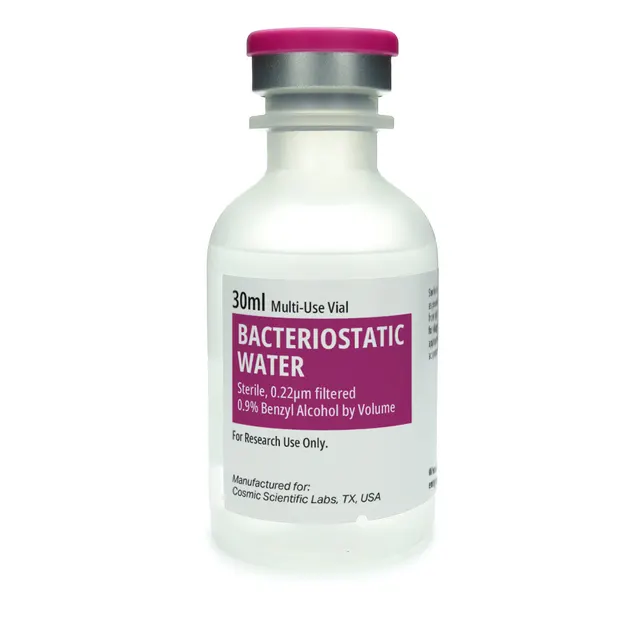
Bacteriostatic Water - 30mL
Commonly researched with these items
Patent-pending lot tracking: Complete transparency from production to vial.
| Lot Number | 26135 |
|---|
Bacteriostatic Water, 30 mL in HDPE: 0.9% Benzyl Alcohol in Water, Packaged in High-Density Polyethylene
Disclaimer
Products described here are supplied for research use only and are not intended for diagnostic, therapeutic, or clinical application. All statements regarding biological activity reflect preclinical and in vitro findings exclusively and have not been evaluated by the U.S. Food and Drug Administration. These materials and related content are provided for educational and investigational purposes only and are intended solely for qualified researchers in laboratory and academic settings.
Key Facts
- Compound class
- Research solvent: aqueous solution of benzyl alcohol, an aromatic primary alcohol used as an antimicrobial preservative in laboratory reagents
- Sequence / structure
- Not a peptide. Water (H–O–H) with 0.9% (w/v) benzyl alcohol, phenylmethanol, C6H5CH2OH, equivalent to 9 mg/mL or 83.2 mmol/L
- Molecular formula
- H2O (solvent); C7H8O (benzyl alcohol, the preservative)
- Molecular weight
- 18.015 g/mol (water); 108.14 g/mol (benzyl alcohol, monoisotopic mass 108.0575 Da)
- CAS number
- The mixture has no CAS number of its own; components: water 7732-18-5, benzyl alcohol 100-51-6
- PubChem CID
- 962 (water); 244 (benzyl alcohol)
- Container
- High-density polyethylene (HDPE), nominal fill 30 mL; a glass-packaged counterpart is also listed
- Physical form as supplied
- Aqueous solution: clear, colourless liquid
- Lot traceability
- Every unit is tied to a tracked lot; the lot number, recorded purity and verified quantity of the lot on sale are shown live on this page, with its certificate of analysis.
Molecular Identity and Classification
Bacteriostatic water is a two-component laboratory solvent: high-purity water containing 0.9% weight-per-volume benzyl alcohol. Water (oxidane, H2O, CAS 7732-18-5, PubChem CID 962) is the solvent and makes up more than 99% of the mass. Benzyl alcohol (phenylmethanol, C7H8O, CAS 100-51-6, PubChem CID 244) is the only intentional solute. Because it is a defined mixture rather than a single substance, the solution has no CAS registry number of its own; it is identified by its composition and by the identities of its two components.
The word bacteriostatic carries a precise microbiological meaning. A bacteriostatic agent inhibits the growth and multiplication of bacteria without necessarily killing them quickly; a bactericidal agent kills. At 9 mg/mL, benzyl alcohol sits in the bacteriostatic range: it holds a contaminating microbial population in check over days and weeks rather than killing every organism in a solution within minutes. Its purpose is to keep a repeatedly sampled container from becoming a growth medium once contaminated.
Expressed in molar terms, 9 g of benzyl alcohol per litre divided by its molecular weight of 108.14 g/mol gives 83.2 mmol/L. One 30 mL container therefore holds about 270 mg, or 2.50 mmol, of benzyl alcohol, a volume of roughly 0.26 mL of the neat liquid (density 1.04 g/mL). That is about 1.5 benzyl alcohol molecules per 1,000 water molecules: minor by mole fraction, yet high by the standards of most assay additives.
This product is the HDPE-packaged member of a small family of research diluents. The same solution is offered in glass as Bacteriostatic Water, 30 mL, Glass and in a smaller format as Bacteriostatic Water, 10 mL, and a saline counterpart containing 0.9% sodium chloride as well as benzyl alcohol is listed as Bacteriostatic Saline, 30 mL. The liquid inside is the same chemistry across the water products; what distinguishes this one is the container, and the container is a chemical system in its own right.
Structure and Chemical Features
Benzyl alcohol is the simplest aromatic alcohol in which the hydroxyl group is separated from the ring by one carbon: a phenyl ring bonded to a hydroxymethyl group (C6H5CH2OH). That single methylene spacer is what separates its chemistry from phenol. In phenol the hydroxyl sits directly on the ring, the oxygen lone pair is delocalised into the aromatic system, and the O–H proton is relatively acidic (pKa about 10). In benzyl alcohol the hydroxyl is attached to an sp3 carbon and behaves like that of an ordinary primary alcohol; its pKa is about 15.4, so it is entirely un-ionised across the whole aqueous pH range. Benzyl alcohol therefore contributes no buffering and no charge to the solution.
The molecule has one hydrogen-bond donor and one acceptor, a single rotatable bond, a topological polar surface area of 20.2 Å2 and an octanol–water partition coefficient (log Kow) of 1.10. It is amphiphilic in a modest way: the hydroxyl hydrogen-bonds to water, while the phenyl ring is hydrophobic and favours non-polar environments. This dual character explains its water solubility of about 42.9 mg/mL at 25 °C (roughly 1 g in 25 mL), and also its tendency to partition into lipid bilayers, hydrophobic protein surfaces and polymers. At 9 mg/mL the solution is at about 21% of saturation, comfortably single-phase at room temperature.
The benzylic position is the chemically reactive site. C–H bonds on a carbon adjacent to an aromatic ring are weaker than ordinary alkyl C–H bonds, because the radical or cation formed by removing a hydrogen is stabilised by the ring. Under air, light and trace metals benzyl alcohol is slowly oxidised at this position, first to benzaldehyde (C7H6O, 106.12 g/mol, PubChem CID 240) and then to benzoic acid (C7H6O2, 122.12 g/mol, PubChem CID 243). These two compounds are the principal degradants of the preservative and, as discussed under Analytical Characterization, the ones a laboratory looks for when it checks an older solution.
The Container Material: High-Density Polyethylene
High-density polyethylene is a polymer of ethylene with the repeat unit –(CH2–CH2)–. Its defining feature is a low frequency of short-chain branches, which lets the chains pack into orthorhombic crystallites. Typical HDPE has a density of about 0.941–0.965 g/cm3, a crystalline fraction of roughly 60–80%, a crystalline melting range of about 130–137 °C and a glass transition far below room temperature. A container wall is therefore a two-phase material: impermeable crystalline lamellae embedded in a rubbery amorphous phase through which small molecules move. Every barrier property of HDPE, from its very low water-vapour transmission to its comparatively open path for oxygen and carbon dioxide, is a property of that amorphous fraction.
Polyethylene is a saturated hydrocarbon with no hydrolysable bonds and no ionisable groups. Unlike glass it has no borate or silica network to dissolve; its only plausible inorganic contributions are trace polymerisation-catalyst residues (titanium, aluminium or chromium at parts-per-million levels in the resin) and metal stearates such as calcium or zinc stearate added as acid scavengers, which are largely bound in the polymer. What it mainly contributes are organic species, chiefly the antioxidants that protect it during melt processing and their transformation products.
Synthesis and Manufacturing Chemistry
Water. High-purity water for laboratory reagents is produced by combinations of distillation, reverse osmosis, ion exchange and filtration. Distillation removes non-volatile ionic and organic material; reverse osmosis and ion exchange remove dissolved salts; filtration removes particles and microorganisms. Its quality is described by conductivity, total organic carbon and microbial content.
Benzyl alcohol. The molecule was first prepared in 1853 by Stanislao Cannizzaro, who allowed benzaldehyde to react with concentrated potassium hydroxide and obtained benzyl alcohol together with potassium benzoate. In this disproportionation, now known as the Cannizzaro reaction, one aldehyde molecule is reduced to the alcohol while a second is oxidised to the carboxylate, a pathway open only to aldehydes that have no hydrogen on the carbon next to the carbonyl. Industrial benzyl alcohol today is made mainly by hydrolysis of benzyl chloride, itself obtained by side-chain chlorination of toluene, and by catalytic hydrogenation of benzaldehyde. The hydrolysis route can leave traces of chlorinated aromatics, and both routes leave small amounts of benzaldehyde, which is why commercial specifications for benzyl alcohol limit aldehyde and chlorinated impurities.
The polymer. High-density polyethylene became possible with the low-pressure catalytic processes of the mid-1950s. Karl Ziegler and co-workers at the Max Planck Institute in Mülheim reported in 1955 that titanium halides combined with aluminium alkyls polymerise ethylene at atmospheric pressure and modest temperature into a linear, high-melting, high-density polymer, in contrast to the highly branched low-density polyethylene made by the earlier high-pressure radical process. Supported chromium (Phillips) and metallocene catalysts followed.
The container. HDPE bottles and vials are formed by blow moulding: an extruded molten tube, or a moulded preform, is inflated against a cooled mould. To survive processing near 200 °C, the resin is compounded with antioxidants, typically a hindered phenol paired with a phosphite such as tris(2,4-di-tert-butylphenyl) phosphite (C42H63O3P, PubChem CID 91601). The phosphite sacrificially reduces hydroperoxides and is converted to the corresponding phosphate; phenolic antioxidants degrade to products such as 2,4-di-tert-butylphenol. Hammond and colleagues showed for polyethylene bioprocess films that ionising radiation of oxidised phosphite generates bis(2,4-di-tert-butylphenyl) phosphate, a leachable that impaired the growth of mammalian cell lines in culture well below the parts-per-million range.
Analytical Characterization
Assay of benzyl alcohol. The preservative is quantified by reversed-phase HPLC with UV detection or by gas chromatography with flame-ionisation detection. In HPLC, benzyl alcohol is retained moderately on C18 columns with water–methanol or water–acetonitrile mobile phases and is detected through its benzenoid absorption band; tabulated UV maxima in alcohol are 243 nm (log ε 1.91), 258.5 nm (log ε 2.26) and 268 nm (log ε 1.95). The same run separates benzaldehyde and benzoic acid, which absorb much more strongly than benzyl alcohol because their carbonyl groups are conjugated with the ring, so low levels of oxidation are readily visible.
Degradant profile. Beyond benzaldehyde and benzoic acid, Abend and colleagues identified benzaldehyde dibenzyl acetal (C21H20O2, 304.4 g/mol), formed reversibly from benzyl alcohol and its own oxidation product once the alcohol has been exposed to air. The acetal can appear as an unexpected late-eluting peak in methods that use benzyl-alcohol-containing samples, and it can exchange with other alcohols to form mixed acetals. Benzoic acid (pKa 4.2) is the degradant that changes solution properties: its accumulation lowers the pH of the unbuffered water.
Mass spectrometry. In electron-ionisation GC-MS, benzyl alcohol gives a molecular ion at m/z 108 together with prominent fragments at m/z 107, 79 (the base peak in library spectra) and 77. In electrospray LC-MS the neutral alcohol ionises poorly; it is usually seen as the sodium adduct [M+Na]+ at m/z 131.047 or, after in-source loss of water from [M+H]+ (m/z 109.065), as the C7H7+ ion at m/z 91.054. When peptide samples prepared in this diluent are analysed, these ions are part of the expected background. The table collects the exact masses a laboratory needs to recognise the preservative, its degradants and the common polyolefin leachables in a full-scan run.
| Species | Formula | Monoisotopic mass (Da) | Ions to look for (m/z) |
|---|---|---|---|
| Benzyl alcohol | C7H8O | 108.0575 | [M+Na]+ 131.0467; [M+H−H2O]+ 91.0542; EI 108, 107, 79, 77 |
| Benzaldehyde | C7H6O | 106.0419 | [M+H]+ 107.0491; EI 106, 105, 77 |
| Benzoic acid | C7H6O2 | 122.0368 | [M−H]− 121.0295 |
| Benzaldehyde dibenzyl acetal | C21H20O2 | 304.1463 | [M+Na]+ 327.1356; [M+NH4]+ 322.1802 |
| 2,4-Di-tert-butylphenol | C14H22O | 206.1671 | [M−H]− 205.1598 |
| Bis(2,4-di-tert-butylphenyl) phosphate | C28H43O4P | 474.2899 | [M−H]− 473.2826 |
| Peptide + benzylidene (imine) | +C7H4 | +88.0313 | Satellite at [M+zH]z+ + 88.0313/z |
The acid–base chemistry of the degradants decides their polarity of detection: benzoic acid and the phosphate diester carry acidic protons and are best seen in negative mode, whereas the neutral aldehyde and acetal need protonation or cation adducts in positive mode.
pH, and why it is a range. Water preserved with benzyl alcohol is conventionally specified at pH 4.5–7.0, and the reason is carbon dioxide rather than the preservative. Unbuffered water equilibrates with atmospheric CO2. With a Henry's-law solubility of about 3.3 × 10⁻⁴ mol m−3 Pa−1 and an atmospheric partial pressure near 42.6 Pa (420 ppm), dissolved CO2 reaches about 1.4 × 10⁻⁵ mol/L. Its first acid dissociation (pKa1 6.35) then gives [H+] = √(Ka1 × [CO2]) ≈ 2.5 × 10⁻⁶ mol/L, or pH 5.6. Because the solution contains no buffer, a few micromoles per litre of carbonic or benzoic acid move the pH by a whole unit, so the measured value depends on how long and how openly the solution has met the air. Glass electrodes drift in such poorly conducting samples; a low-ionic-strength electrode, or a defined pinch of neutral salt added to a separate aliquot, gives steadier readings.
Container-related testing. HDPE containers are characterised for extractables (what an aggressive solvent can pull from the material) and leachables (what actually migrates into the stored liquid). LC-MS screens commonly target 2,4-di-tert-butylphenol (C14H22O, monoisotopic mass 206.1671 Da, [M−H]− m/z 205.160) and bis(2,4-di-tert-butylphenyl) phosphate (C28H43O4P, monoisotopic mass 474.2899 Da, [M−H]− m/z 473.283), together with slip agents such as erucamide (C22H43NO, 337.6 g/mol). The framework for this work is set out in the United States Pharmacopeia general chapters on plastic materials and packaging systems and in reviews such as Jenke's on the compatibility of plastic contact materials.
Preservative performance. The antimicrobial function of a preserved solution is evaluated by challenge testing, as in USP general chapter <51>: the solution is inoculated with defined organisms (typically Staphylococcus aureus, Escherichia coli, Pseudomonas aeruginosa, Candida albicans and Aspergillus brasiliensis) and the surviving counts are followed over 28 days. A bacteriostatic preservative is expected to reduce bacterial counts progressively and to prevent growth of yeasts and moulds, rather than to kill everything immediately.
Physicochemical Properties
| Property | Value | Notes |
|---|---|---|
| Benzyl alcohol concentration | 0.9% w/v = 9 mg/mL = 83.2 mmol/L | Calculated from MW 108.14 g/mol |
| Benzyl alcohol per 30 mL | about 270 mg (2.50 mmol; about 0.26 mL neat) | Calculated; density of neat liquid about 1.04 g/mL |
| Fraction of aqueous solubility | about 21% | Solubility 42.9 mg/mL at 25 °C |
| Osmolality (estimated) | about 83 mOsm/kg | Non-electrolyte; strongly hypo-osmotic relative to cell culture media (about 280–320 mOsm/kg) |
| pH (conventional specification) | 4.5–7.0 | Unbuffered; air-equilibrated water is about pH 5.6 |
| Benzyl alcohol log Kow | 1.10 | Moderately lipophilic |
| Benzyl alcohol pKa | 15.4 | Un-ionised at all aqueous pH values |
| Benzyl alcohol boiling / melting point | 205.3 °C / −15.2 °C | Neat liquid |
| Benzyl alcohol vapour pressure | 0.094 mmHg (25 °C) | Low volatility |
| Benzyl alcohol Henry's-law constant | 3.37 × 10⁻⁷ atm m3/mol (25 °C) | Strongly retained by the aqueous phase |
| Benzyl alcohol viscosity (neat) | 5.47 cP (25 °C) | The 0.9% solution is close to water (about 0.89 cP) |
| Benzyl alcohol refractive index (neat) | 1.5396 (20 °C, sodium D line) | Identity check for the raw material |
| UV maxima of benzyl alcohol | 243, 258.5, 268 nm | log ε 1.91, 2.26, 1.95 (in alcohol) |
| Container polymer | HDPE, density about 0.941–0.965 g/cm3 | Crystalline melting about 130–137 °C |
Two numbers account for most of the solution's practical behaviour. The very low Henry's-law constant means benzyl alcohol strongly prefers the water to the headspace, so evaporative loss from a closed container is negligible, unlike for chlorobutanol. The log Kow of 1.10 means benzyl alcohol is lipophilic enough to dissolve into hydrophobic phases, including lipid membranes, hydrophobic patches on proteins and, to a limited extent, the amorphous phase of a polymer container. Roberts and colleagues followed the disappearance kinetics of selected substances from aqueous solutions stored in polyethylene containers and examined how physicochemical factors govern that loss; partitioning between water and the polymer's amorphous phase is the natural lens for thinking about any lipophilic solute stored in plastic.
At about 83 mOsm/kg the solution is a solvent to be diluted into buffered medium, never a medium in itself. The salt-containing counterpart reaches roughly 370 mOsm/kg (about 286 mOsm/kg from 154 mmol/L sodium chloride with an osmotic coefficient near 0.93, plus 83 mOsm/kg from benzyl alcohol).
Research Context
In the laboratory, preserved water is used as a diluent: a liquid into which a research material such as a lyophilised peptide is dissolved to make a stock solution that will be sampled more than once. The physical chemistry that makes benzyl alcohol a preservative also makes it an experimental variable in its own right.
Benzyl Alcohol as a Membrane Fluidiser
Benzyl alcohol is one of the classic tools of membrane biophysics. Its amphiphilic structure lets it insert at the interface between the polar head groups and the hydrocarbon core of a lipid bilayer, increasing the conformational freedom of the acyl chains. Ebihara and colleagues used optical, electrical and X-ray diffraction methods to show that its effect on bilayer thickness differs sharply between solvent-containing planar bilayers (which thicken), solvent-free planar bilayers (which thin) and vesicles, a cautionary result about generalising from one model membrane to another. Horváth and colleagues later used benzyl alcohol as a chemical fluidiser in cultures of the cyanobacterium Synechocystis PCC 6803, measuring membrane order by diphenylhexatriene fluorescence anisotropy, and found that fluidising the thylakoid membranes shifted the temperature at which heat-shock genes were induced. That study helped establish the idea that membrane physical state acts as a cellular temperature sensor. The membrane-active character of benzyl alcohol is also the generally accepted basis of its antimicrobial action: partitioning into the cytoplasmic membrane perturbs its permeability and the function of membrane-bound enzymes.
Preservative-Induced Protein Aggregation
The second major body of research concerns proteins. Zhang and colleagues showed that benzyl alcohol induces aggregation of a recombinant cytokine receptor antagonist in aqueous solution and traced the effect to a small shift in the protein's conformational equilibrium toward partially unfolded, aggregation-prone states, rather than to global unfolding. Hutchings and colleagues compared five common preservatives using cytochrome c as a model and found a consistent ranking of aggregation propensity: m-cresol > phenol > benzyl alcohol > phenoxyethanol > chlorobutanol. All five enhanced the partial unfolding of the same local region, and stabilising that region reduced aggregation induced by each of them. The mechanism is hydrophobic: the aromatic ring binds transiently to exposed non-polar surfaces and lowers the free energy of partially opened conformations.
For a researcher choosing a diluent, the practical reading is structure-dependent. Short, flexible peptides with no stable tertiary fold have no partially unfolded state to populate and are generally indifferent to benzyl alcohol at 83 mmol/L; examples on this site include the tripeptide copper complex GHK-Cu and the pentadecapeptide BPC-157. Longer amphipathic or helix-forming peptides, and any folded protein, deserve a compatibility check: compare the peptide's HPLC profile, and if relevant its circular-dichroism spectrum or turbidity, in plain water and in preserved water after storage under the intended conditions.
Benzaldehyde and Amine Chemistry
A subtler interaction involves the preservative's oxidation product. Benzaldehyde condenses reversibly with primary amines (the N-terminal α-amine and lysine ε-amines of a peptide) to form imines, or Schiff bases. The net change is addition of C7H4, a mass shift of +88.031 Da; if the imine is reduced, as happens deliberately in reductive amination with cyanoborohydride, the stable N-benzyl product carries +90.047 Da. Because imine formation is reversible in water and benzaldehyde levels in a fresh solution are low, such adducts are normally minor, but a small satellite peak at +88 Da in the mass spectrum of a lysine-containing peptide stored for a long time in an oxidised diluent is a recognisable signature, and knowing the expected mass shift turns a puzzling artefact into a diagnosis.
Vehicle controls in cell-based assays. When a stock solution made in preserved water is added to cells, the benzyl alcohol travels with it. A worked example: 10 µL of stock added to 1 mL of medium gives a 101-fold dilution, so the final benzyl alcohol concentration is 83.2 mmol/L ÷ 101 ≈ 0.82 mmol/L (about 0.009%). That is well below the tens-of-millimolar concentrations used for deliberate membrane fluidisation, but it is not zero, so the correct control is the same volume of the same diluent without the test material. The table extends the calculation; the osmolality column assumes a medium of 300 mOsm/kg mixed with the diluent at about 83 mOsm/kg.
| Stock : medium | Dilution factor | Final benzyl alcohol | Final osmolality (approx.) |
|---|---|---|---|
| 1 : 999 | 1,000 | 0.083 mmol/L (0.0009%) | 300 mOsm/kg |
| 1 : 99 | 100 | 0.83 mmol/L (0.009%) | 298 mOsm/kg |
| 1 : 19 | 20 | 4.2 mmol/L (0.045%) | 289 mOsm/kg |
| 1 : 9 | 10 | 8.3 mmol/L (0.09%) | 278 mOsm/kg |
HDPE Versus Glass: Container Chemistry Compared
The choice between this HDPE container and the glass-packaged Bacteriostatic Water, 30 mL, Glass is a choice between two different sets of chemical interactions. Neither material is inert.
| Attribute | HDPE | Borosilicate glass |
|---|---|---|
| Inorganic leaching | No borate or silica; at most traces of catalyst residues and stearate-bound calcium or zinc | Low levels of sodium, boron, silicon and aluminium; increases with temperature and with alkaline or chelating contents |
| Organic leachables | Antioxidant residues and degradants, oligomers, slip agents at trace levels | Essentially none from the glass itself (closure components aside) |
| Gas permeability (O2, CO2) | Measurable through the amorphous phase | Effectively zero through the wall |
| Water-vapour transmission | Very low | Effectively zero through the wall |
| Effect on pH over time | Slow equilibration with atmospheric CO2 through the wall and closure | Determined by the closure and by alkali release from the glass |
| Sorption of solutes | Possible for lipophilic solutes into the polymer | Negligible into the wall |
| Surface character for adsorption | Hydrophobic: favours adsorption of hydrophobic sequences | Anionic silanol groups: favours adsorption of basic, cationic sequences |
| Particulate risk | No glass delamination; no breakage fragments | Delamination possible under aggressive conditions; breakage |
| Thermal limit | Softens well below 130 °C | Tolerates high temperatures |
| Mechanical behaviour | Light, shatter-resistant, suitable for shipping | Rigid, brittle |
Glass. Borosilicate glass (pharmacopoeial Type I) is the reference material for chemical resistance, but its surface is reactive. Guadagnino and Zuccato showed with repeated high-temperature extractions that alkaline and chelating media increase silica extraction and the tendency of glass to shed lamellae, with the bottom and shoulder of vials most vulnerable because forming leaves those zones depleted in alkali and borate. Preserved water near pH 5–6 is a mild medium for glass, so delamination is not a concern for its normal storage, yet the ion-exchange chemistry of the glass surface still releases traces of sodium and borate, which raise the pH of unbuffered contents over long periods.
HDPE. Polyethylene removes the inorganic pathway entirely and replaces it with an organic one. Its permeability to oxygen and carbon dioxide is low compared with many polymers but much higher than glass, as reviewed by Siracusa for packaging polymers. Two consequences follow for preserved water: dissolved CO2 tends toward the atmospheric equilibrium value of pH about 5.6 described above, and oxygen ingress supplies the oxidant for slow conversion of benzyl alcohol to benzaldehyde. Both effects are slow at room temperature and are reduced by storing the container closed, upright and away from light and heat.
Adsorption of the dissolved material. For peptide work the container's surface matters as much as its bulk. Goebel-Stengel and colleagues measured the recovery of radiolabelled peptides from glass and plastic tubes and found large, peptide-specific differences: no single surface was best for every peptide, siliconisation reduced recovery, and a carrier protein improved it. A widely used rule of thumb, consistent with the two surface chemistries, is electrostatic and hydrophobic: basic peptides tend to bind the anionic silanols of glass, hydrophobic peptides tend to bind polyolefins. Preserved water itself is not affected, but a dilute peptide solution stored in the container may be, and this is an argument for preparing concentrated stocks and aliquoting them into low-binding tubes.
Choosing Among Laboratory Diluents
| Diluent | Composition | Osmolality (approximate) | Practical considerations |
|---|---|---|---|
| High-purity water | H2O only | about 0 mOsm/kg | No preservative: suited to single-use solutions; no UV background |
| Preserved water (this product) | H2O + 0.9% benzyl alcohol (83.2 mmol/L) | about 83 mOsm/kg | Inhibits microbial growth in repeatedly sampled stocks; strong UV background; unbuffered |
| Preserved saline | 0.9% NaCl (154 mmol/L) + 0.9% benzyl alcohol | about 370 mOsm/kg | Ionic strength about 0.15 mol/L can lower solubility of hydrophobic or aggregation-prone peptides; screens electrostatic interactions |
| Dilute acetic acid (for example 0.1–1%) | H2O + CH3COOH | low | Protonates basic residues and aids dissolution of some peptides; no preservative |
Charged peptides that dissolve readily in water can precipitate when salt screens the repulsion between molecules, so a common practice is to dissolve the material first in water and only then dilute into a buffered, salt-containing medium.
Laboratory Handling and Storage
Storage of the unopened container. Store at controlled room temperature (about 20–25 °C), upright, closed and protected from light. Light and heat accelerate benzylic oxidation, and HDPE softens and creeps well before its 130–137 °C melting range, so the container should not be autoclaved, heated or placed near heat sources. Keep it away from strong oxidisers and from volatile organic solvents, which can permeate polyethylene.
Once opened. Use aseptic laboratory technique: wipe the closure with 70% isopropanol or ethanol and let it dry before each opening, and dispense with clean, single-use pipette tips so that nothing is returned to the container. The preservative inhibits growth of the occasional contaminant; it is not a substitute for clean handling and cannot rescue a heavily contaminated container. Record the date of first opening. Discard the solution if it becomes turbid, coloured or shows particles, or if it develops the bitter-almond odour of benzaldehyde.
Freezing. Freezing concentrates solutes between ice crystals, where benzyl alcohol can exceed its solubility and separate as droplets that redissolve only on full thawing. Keep the diluent unfrozen; thaw frozen stock aliquots completely and mix gently before use.
Preparing stock solutions. Allow the research material and the diluent to reach room temperature. Add the diluent slowly down the wall of the vessel, swirl gently rather than vortexing vigorously (to limit foaming and interfacial denaturation of larger peptides), and confirm complete dissolution visually. Correct weighed masses for peptide content when exact molar concentrations matter, prepare concentrated stocks, divide them into single-use aliquots, and store them as appropriate for the dissolved material.
Analytical blanks. At 83.2 mmol/L, benzyl alcohol's 258.5 nm band (ε about 180 M−1 cm−1) alone gives a calculated absorbance of about 15 in a 1 cm cell, and its absorption remains appreciable toward 280 nm. Never quantify a peptide by direct UV absorbance in this diluent without a matched blank, and prefer methods that separate the peptide from benzyl alcohol, such as HPLC, or that are insensitive to it, such as amino-acid analysis. In reversed-phase HPLC the benzyl alcohol peak is large and must be resolved from the analyte; checking its retention time with a run of the diluent alone is quick and avoids misidentification.
Frequently Asked Research Questions
- What is bacteriostatic water?
- It is high-purity water containing 0.9% (w/v) benzyl alcohol, equivalent to 9 mg/mL or 83.2 mmol/L. The benzyl alcohol inhibits the growth of microorganisms so that a container sampled more than once does not become a growth medium.
- What is the CAS number of bacteriostatic water?
- As a mixture it has no CAS number of its own. Its components are water (CAS 7732-18-5, PubChem CID 962) and benzyl alcohol (CAS 100-51-6, PubChem CID 244).
- How does benzyl alcohol inhibit microbial growth?
- Benzyl alcohol is amphiphilic (log Kow 1.10). It partitions into the cytoplasmic membrane of microorganisms, disordering the lipid acyl chains and disturbing membrane permeability and the function of membrane-bound enzymes.
- Why is the pH of bacteriostatic water specified as a range (4.5–7.0)?
- The solution is unbuffered, so its pH is set mainly by dissolved carbon dioxide. Water in equilibrium with air (about 420 ppm CO2) has a calculated pH near 5.6, and micromolar amounts of carbonic or benzoic acid shift it noticeably.
- What is the difference between the HDPE and the glass container?
- Glass releases trace inorganic ions (sodium, borate, silica) but is impermeable to gases; HDPE has no borate or silica to release but can contribute trace organic leachables and allows slow exchange of oxygen and carbon dioxide. HDPE is shatter-resistant; glass tolerates high temperatures. The solution inside is the same.
- What does benzyl alcohol degrade into?
- Slow oxidation at the benzylic carbon gives benzaldehyde (106.12 g/mol) and then benzoic acid (122.12 g/mol, pKa 4.2). Benzaldehyde can also combine with benzyl alcohol to form benzaldehyde dibenzyl acetal (304.4 g/mol).
- Does benzyl alcohol interfere with UV quantification of peptides?
- Yes. At 83.2 mmol/L its absorption band near 258 nm gives a calculated absorbance of about 15 in a 1 cm cell, and absorption extends toward 280 nm. Use a matched diluent blank, or quantify by HPLC or amino-acid analysis.
- What ions does benzyl alcohol give in mass spectrometry?
- In EI GC-MS, the molecular ion at m/z 108 with fragments at 107, 79 (base peak) and 77. In ESI LC-MS it ionises weakly, typically as [M+Na]+ at m/z 131.047 or as C7H7+ at m/z 91.054. Its monoisotopic mass is 108.0575 Da.
- Can benzyl alcohol affect dissolved peptides or proteins?
- Benzyl alcohol can promote aggregation of folded proteins by stabilising partially unfolded states; in a cytochrome c comparison it ranked below m-cresol and phenol but above phenoxyethanol and chlorobutanol. Short, unstructured peptides are generally unaffected, but larger or amphipathic sequences warrant a compatibility check by HPLC.
- What benzyl alcohol concentration reaches cells when a stock is diluted into medium?
- It is 83.2 mmol/L divided by the dilution factor: a 1:100 addition gives about 0.8 mmol/L and a 1:10 addition about 8 mmol/L. A vehicle control containing the same volume of the diluent accounts for it.
- Is bacteriostatic water iso-osmotic with cell culture media?
- No. Its estimated osmolality is about 83 mOsm/kg, against roughly 280–320 mOsm/kg for typical media, so it should be used as a solvent for concentrated stocks that are then diluted into buffered medium.
Sources & Further Reading
- National Center for Biotechnology Information. PubChem Compound Summary for CID 244, Benzyl alcohol. PubChem CID 244.
- National Center for Biotechnology Information. PubChem Compound Summary for CID 962, Water. PubChem CID 962.
- National Center for Biotechnology Information. PubChem Compound Summaries for CID 240, Benzaldehyde, and CID 243, Benzoic acid. PubChem CID 240; PubChem CID 243.
- Cannizzaro S. Ueber den der Benzoësäure entsprechenden Alkohol. Justus Liebigs Annalen der Chemie 1853;88(1):129–130. doi:10.1002/jlac.18530880114
- Ziegler K, Holzkamp E, Breil H, Martin H. Das Mülheimer Normaldruck-Polyäthylen-Verfahren. Angewandte Chemie 1955;67(19–20):541–547. doi:10.1002/ange.19550671902
- Abend AM, Chung L, Bibart RT, Brooks M, McCollum DG. Concerning the stability of benzyl alcohol: formation of benzaldehyde dibenzyl acetal under aerobic conditions. Journal of Pharmaceutical and Biomedical Analysis 2004;34(5):957–962. doi:10.1016/j.jpba.2003.11.007
- Ebihara L, Hall JE, MacDonald RC, McIntosh TJ, Simon SA. Effect of benzyl alcohol on lipid bilayers. A comparisons of bilayer systems. Biophysical Journal 1979;28(2):185–196. doi:10.1016/S0006-3495(79)85170-X
- Horváth I, Glatz A, Varvasovszki V, et al. Membrane physical state controls the signaling mechanism of the heat shock response in Synechocystis PCC 6803: identification of hsp17 as a "fluidity gene". Proceedings of the National Academy of Sciences USA 1998;95(7):3513–3518. doi:10.1073/pnas.95.7.3513
- Zhang Y, Roy S, Jones LS, et al. Mechanism for benzyl alcohol-induced aggregation of recombinant human interleukin-1 receptor antagonist in aqueous solution. Journal of Pharmaceutical Sciences 2004;93(12):3076–3089. doi:10.1002/jps.20219
- Hutchings RL, Singh SM, Cabello-Villegas J, Mallela KMG. Effect of antimicrobial preservatives on partial protein unfolding and aggregation. Journal of Pharmaceutical Sciences 2013;102(2):365–376. doi:10.1002/jps.23362
- Roberts MS, Polack AE, Martin G, Blackburn HD. The storage of selected substances in aqueous solution in polyethylene containers: the effect of some physicochemical factors on the disappearance kinetics of the substances. International Journal of Pharmaceutics 1979;2(5–6):295–306. doi:10.1016/0378-5173(79)90036-X
- Jenke D. Evaluation of the chemical compatibility of plastic contact materials and pharmaceutical products; safety considerations related to extractables and leachables. Journal of Pharmaceutical Sciences 2007;96(10):2566–2581. doi:10.1002/jps.20984
- Hammond M, Nunn H, Rogers G, et al. Identification of a leachable compound detrimental to cell growth in single-use bioprocess containers. PDA Journal of Pharmaceutical Science and Technology 2013;67(2):123–134. doi:10.5731/pdajpst.2013.00905
- Guadagnino E, Zuccato D. Delamination propensity of pharmaceutical glass containers by accelerated testing with different extraction media. PDA Journal of Pharmaceutical Science and Technology 2012;66(2):116–125. doi:10.5731/pdajpst.2012.00853
- Goebel-Stengel M, Stengel A, Taché Y, Reeve JR Jr. The importance of using the optimal plasticware and glassware in studies involving peptides. Analytical Biochemistry 2011;414(1):38–46. doi:10.1016/j.ab.2011.02.009
- Siracusa V. Food packaging permeability behaviour: a report. International Journal of Polymer Science 2012;2012:302029. doi:10.1155/2012/302029
- Sander R. Compilation of Henry's law constants (version 4.0) for water as solvent. Atmospheric Chemistry and Physics 2015;15(8):4399–4981. doi:10.5194/acp-15-4399-2015
Last reviewed:
In the research library
The methods behind the numbers on a certificate of analysis.
- How to read a certificate of analysis What a peptide certificate of analysis should contain, how to check that it belongs to the material in hand, how to read its identity and purity results, and the signs that it deserves a second look.
- Bacteriostatic water and bacteriostatic saline as laboratory reagents What the two preserved aqueous reagents contain, in every unit, what 0.9% benzyl alcohol does to microbes and to peptides, and the spectroscopy, chromatography and cell-based work where plain water is the better solvent.
- Preparing peptide solutions in the laboratory From a freeze-dried vial to a solution of known concentration: the arithmetic, the solvent, the charge chemistry and the handling, with the errors each step can introduce and the article that covers it.
- Peptide stability and storage How peptides degrade, chemically and physically, why the dry solid lasts far longer than a solution, which sequences are most at risk, and the storage and handling that slow it down.
- Water content of peptides: Karl Fischer titration How Karl Fischer titration measures the water in a freeze-dried peptide, why the coulometric and oven methods suit peptide samples, what interferes, and how the result is used.